

In the mining industry, steel grinding media play a critical role in the crushing and separation of ores. They are typically used in ball mills to assist in grinding ores and improving particle size distribution. Selecting the appropriate grinding media not only impacts production efficiency but also affects operating costs, final ore quality, and equipment lifespan. Therefore, understanding the factors influencing the choice of steel grinding media is essential for mining companies and equipment suppliers. This article explores the key factors affecting the selection of steel grinding media to help mining companies make informed decisions.
1. Ore Characteristics
Ore properties are one of the primary factors influencing the choice of steel grinding media. The hardness, toughness, density, and mineral composition of the ore directly affect grinding efficiency. For harder ores, grinding media with high wear resistance are crucial, while softer ores may require media with lower wear rates. Additionally, ores containing corrosive components can impact the durability of the media, necessitating materials with higher corrosion resistance.
2. Type of Grinding Mill
Different types of grinding mills require different specifications for grinding media. For example, ball mills, rod mills, and vertical mills have distinct requirements regarding the size, shape, and material of the media. Ball mills typically use spherical or near-spherical steel media to achieve efficient and uniform grinding, whereas rod mills may use elongated rods to ensure better contact with the ore. Choosing media suited to the mill type can improve grinding efficiency and minimize unnecessary wear.
3. Grinding Efficiency
Grinding efficiency is another critical consideration when selecting steel grinding media. High-efficiency media reduce grinding time, increase production rates, and lower energy consumption. Factors such as media hardness, size distribution, and surface smoothness all influence grinding efficiency. Properly chosen media can reduce mill load, improve ore fineness and particle distribution, and enhance final product quality. While harder media may improve grinding results, they can accelerate mill wear, potentially reducing overall cost-effectiveness.
4. Wear Resistance and Cost
Wear resistance is a key factor in steel grinding media selection. The durability of the media determines its service life and impacts production costs. High wear-resistant materials may have a higher initial cost but can reduce long-term expenses due to longer lifespan. Mining companies should balance durability and cost according to production requirements, usage frequency, and budget to select the most cost-effective media.
5. Environmental Considerations
With increasing attention to environmental protection, mining companies must consider the environmental impact of grinding media. Some media may release harmful substances or contaminate water sources during use. Choosing environmentally friendly media helps minimize negative environmental effects and comply with stricter regulations. Environmentally conscious media are often more recyclable, contributing to resource conservation.
6. Media Shape and Size
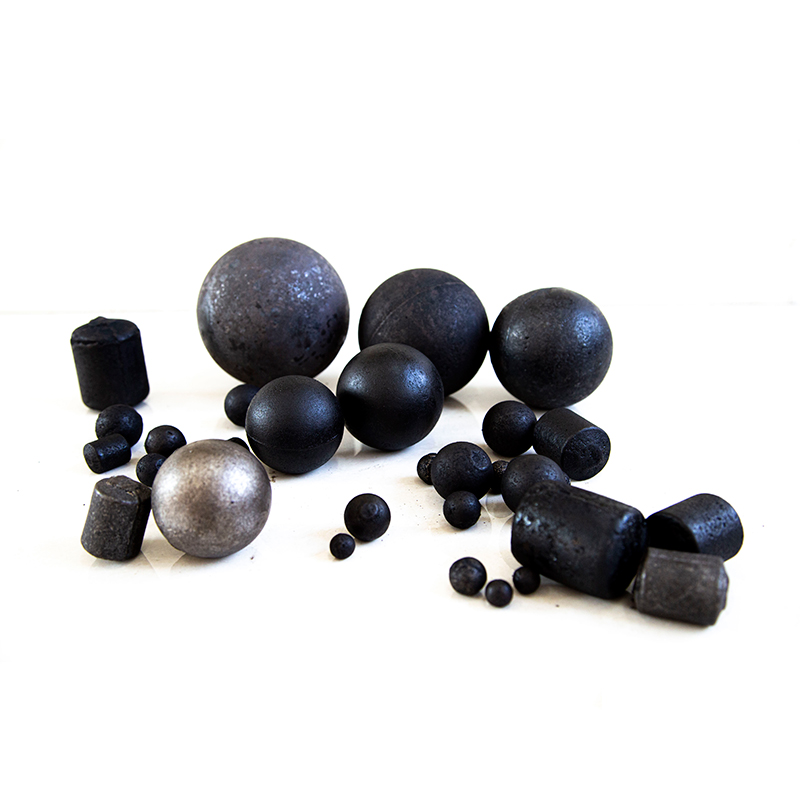
The shape and size of grinding media significantly affect the grinding process. Steel media can be spherical, cylindrical, conical, or other specific shapes, each producing different contact and shear forces during grinding. For example, spherical media is suitable for uniform grinding, while irregular shapes may be better for coarse grinding. Media size is also critical: oversized media may produce excessive coarse particles, while undersized media can reduce grinding efficiency.
7. Production Environment and Process Conditions
The production environment and process conditions at a mine can influence the choice of grinding media. Factors such as temperature, humidity, and vibration levels may require media with higher corrosion resistance or toughness. Mining companies need to select media that can maintain stability and efficiency under specific operational conditions.
Conclusion
Selecting steel grinding media for mining applications is a multifactorial process. Ore characteristics, mill type, grinding efficiency, wear resistance and cost, environmental considerations, media shape and size, and production conditions all play a role in determining the optimal choice. Mining companies should evaluate their specific production needs, ore properties, and equipment requirements to select appropriate steel grinding media that enhance efficiency, reduce costs, and ensure product quality.
Choosing the right grinding media is not only essential for improving production efficiency but also critical for maintaining equipment longevity and minimizing maintenance costs. Our high-quality steel grinding media offer excellent wear resistance and cost-effectiveness, helping optimize ore grinding efficiency. For more information or assistance in selecting the right product, please contact us for professional guidance and solutions.