

In industries such as mining, cement, power generation, and metallurgy, high chrome grinding balls are widely used in ball mills due to their excellent wear resistance. However, in real applications, many users find that grinding balls with similar chemical compositions can have significantly different service lives.
One of the most critical factors behind this difference is the heat treatment process of high chrome grinding balls.
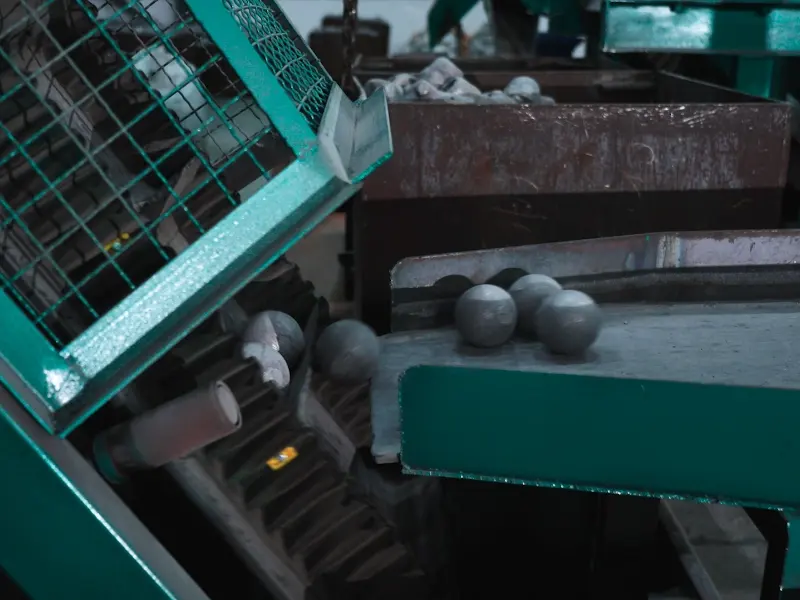
Why Heat Treatment Is Critical for High Chrome Grinding Balls
High chrome grinding balls are high-alloy wear-resistant materials. Their performance depends not only on chromium content, but more importantly on whether a scientific and stable heat treatment process is applied.
Without proper heat treatment, high chrome casting grinding balls may suffer from:
-
Non-uniform microstructure
-
High retained austenite content
-
High surface hardness but insufficient core toughness
-
Cracking, spalling, or breakage during operation
All these issues directly shorten the service life of high chrome grinding balls and increase overall grinding costs.
Typical Heat Treatment Process of High Chrome Grinding Balls
A mature high chrome grinding ball heat treatment process generally includes the following key steps:
1. Quenching – Building the Wear-Resistant Foundation
By precisely controlling heating temperature and holding time, the internal structure of the high chrome grinding ball transforms into high-hardness martensite, forming the basis for excellent wear resistance.
For ball mill high chrome grinding balls, proper quenching ensures:
-
Stable hardness
-
Uniform performance from surface to core
-
Prevention of coarse grain formation
2. Tempering – Balancing Hardness and Toughness
Tempering is a decisive step in determining whether a high chrome casting grinding ball is truly durable.
After proper tempering, grinding balls can:
-
Relieve internal stress from casting and quenching
-
Improve impact resistance and fatigue strength
-
Significantly reduce breakage rate
This process clearly distinguishes high-quality products from ordinary grinding media.
3. Temperature Control and Cooling – Ensuring Structural Uniformity
Professional high chrome grinding ball manufacturers strictly control heating curves, holding time, and cooling methods to ensure consistent microstructure and stable performance in every batch.
How Heat Treatment Directly Affects the Service Life of High Chrome Grinding Balls
1. Extended Service Life
Optimized heat treatment significantly improves wear resistance, allowing high chrome grinding balls to maintain stable wear behavior under high-load operating conditions and last longer in service.
2. Reduced Breakage Rate
Well-treated high chrome casting grinding balls perform more reliably in high-impact environments, with a much lower breakage rate compared to ordinary cast grinding balls.
3. Lower Overall Grinding Cost
Although high-quality high chrome grinding balls may have a slightly higher unit price, their lower consumption rate, reduced downtime, and decreased maintenance costs result in lower total operating costs.
Why the Quality of High Chrome Grinding Balls Varies by Manufacturer
The quality differences among high chrome casting grinding balls in the market mainly depend on:
-
Whether the manufacturer has a mature heat treatment system
-
Availability of professional heat treatment equipment
-
Ability to adjust heat treatment parameters based on working conditions
-
Whether hardness, impact, and microstructure inspections are conducted before delivery
Only by integrating chemical composition design, casting technology, and heat treatment process can the full performance advantages of high chrome grinding balls be achieved.
Stable Heat Treatment Is the Core Guarantee of High-Quality High Chrome Grinding Balls
Under high-wear and high-impact conditions, the heat treatment process of high chrome grinding balls is not optional—it is the key factor determining service life.
Choosing a reliable high chrome grinding ball manufacturer with stable production capability and advanced heat treatment technology is essential for long-term, cost-effective grinding performance.